Aviation Switching Module – NSN 4920-01-250-2696 (AS-IS / Untested): Aircraft Switching Equipment for Parts or Evaluation
Aviation Switching Module – NSN 4920-01-250-2696 (AS-IS / Untested): Aircraft Switching Equipment for Parts or Evaluation
Blog Article
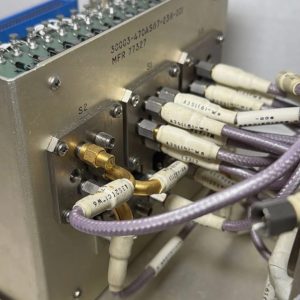
The Aviation Switching Module – NSN 4920-01-250-2696 (AS-IS / Untested) is a specialized aerospace electrical component offered for professional evaluation, restoration, testing, parts recovery, collection, or another suitable non-assumed application.
An Aircraft Switching Module and Aerospace Switching Module should be treated as specialized equipment rather than universal components that can be connected to any aircraft electrical system.
The Aircraft Electrical Switching Module may route selected circuits, while the Aviation Electrical Control Module, Aircraft Power Switching Module, Aerospace Electrical Control Unit, and Aircraft Signal Switching Module terms should not be interpreted as confirmed functions without documentation.
An Aircraft Switching Unit can support specialized signal or circuit management, but an Aerospace Power Distribution Module or Aviation Power Control Module may use different internal architecture and electrical requirements.
Understanding NSN 4920-01-250-2696
Accurate NSN verification helps reduce purchasing errors and prevents an unrelated module from being represented as compatible equipment.
An identification plate should not be removed, repainted, altered, or covered because it may provide the strongest evidence of the component’s origin.
AS-IS Aerospace Equipment Considerations
Internal faults, missing components, damaged wiring, corrosion, previous modification, storage deterioration, or electrical failure may be present even when the exterior appears clean.
Improper voltage, polarity, grounding, current, signal input, or connector pin assignment can damage the module and connected equipment.
Aircraft Switching Module Applications
The actual role depends on internal circuitry, switch configuration, connector pinout, associated system design, and technical documentation.
Missing knobs, guards, labels, connectors, covers, or fasteners may reduce check here completeness.
Maintaining a Switching Module Assembly
The enclosure should be inspected for dents, cracks, corrosion, missing screws, altered holes, broken seals, and unauthorized repairs.
Connectors should be examined for bent pins, pushed-back contacts, corrosion, contamination, cracked inserts, damaged threads, broken keyways, missing caps, and impact marks.
Aircraft Electrical Switching Module Inspection
An Aircraft Electrical Switching Module should be inspected for overheated areas, burned insulation, damaged terminals, loose hardware, corrosion, moisture entry, broken controls, and signs of previous disassembly.
The module should not be modified simply to produce a temporary power-on result.
Aviation Electrical Control Module Functions
An Aviation Electrical Control Module can coordinate or select electrical functions within a compatible aviation or support-equipment system, depending on its documented design.
High-resolution photographs can preserve readable details before cleaning or restoration.
Aviation Power Circuit Management
Current capacity, voltage, duty cycle, contact type, protection requirements, and load characteristics should be confirmed before testing.
Missing covers or barriers may expose conductive points and increase handling risk.
Aviation Control Unit Inspection
An Aerospace Electrical Control Unit may combine switching, control, indication, interface, or distribution functions within one enclosed assembly.
A common-looking relay, switch, resistor, connector, or wire may not be an acceptable substitute.
Maintaining Aircraft Interface Hardware
An Aircraft Signal Switching Module may route low-level, control, communication, measurement, or test signals between compatible equipment channels.
Original cable assemblies may add significant value when included.
Control Module Compatibility Review
Buyers should determine whether they need a direct replacement, restoration item, training aid, or parts source.
Inspection tags, modification plates, repair labels, and revision marks can provide important information.
Aircraft Test and Support Equipment
An Aircraft Switching Unit offered AS-IS may appeal to aviation workshops, military-equipment collectors, technical schools, restoration specialists, and organizations maintaining legacy support equipment.
Training use should avoid destructive modifications when the component has collectible or restoration value.
Aircraft Electrical Distribution Hardware
Professional evaluation helps determine whether the unit serves a power-distribution role or another specialized function.
Preserving the original structure protects the Aerospace Power Distribution Module and its resale value.
Aircraft Module Functional Evaluation
The unit should be photographed before and after any preservation work.
Continuity measurements, insulation checks, contact-resistance testing, and component examination may be appropriate when performed by qualified personnel.
Inspecting a Power Control Module
Broad market keywords can support discovery while the technical description remains precise.
Power-control components may retain electrical energy or contain circuits requiring special handling depending on internal design.
Understanding an Aircraft Electronic Switching System
A systems approach supports more accurate troubleshooting and restoration.
Professional analysis supports responsible Aircraft Electronic Switching System maintenance.
Preserving Military Aviation Equipment
The Aerospace Switching Unit should be stored in a clean, dry, stable environment protected from moisture, dust, chemicals, impact, pests, and extreme temperature changes.
Loose accessories should be wrapped separately and inventoried before packaging.
Choosing an Aircraft Electrical Module
A buyer seeking an operational replacement has different needs from a collector, technical school, parts dealer, or restoration specialist.
Images should show labels, switches, connectors, enclosure surfaces, mounting points, fasteners, seals, internal areas if opened professionally, and included accessories.
Inspecting the Aviation Switching Module Before Purchase
The AS-IS and untested condition should appear clearly within the title, description, invoice, and transaction terms.
- Resolve identity, configuration, application, and package-completeness questions before payment.
- Inspect the enclosure for dents, cracks, corrosion, missing screws, altered holes, broken seals, damaged brackets, and signs of previous opening.
- Retain purchase records, photographs, labels, research, testing notes, and repair documentation with the module.
Professional Bench Evaluation
A qualified technician may use controlled and current-limited equipment appropriate to the module design.
Powered testing should proceed gradually while monitoring current, temperature, smell, noise, indicators, and unexpected behavior.
Restoring the Aerospace Switching Module
Replacement parts should be selected according to electrical rating, mechanical fit, material, environmental requirements, and original design intent.
A repaired module may still require system-level testing or additional qualification before installation.
Buying NSN 4920-01-250-2696
The Aviation Switching Module – NSN 4920-01-250-2696 (AS-IS / Untested) offers stronger commercial appeal when its markings, controls, connectors, enclosure, accessories, history, and limitations are documented accurately.
The strongest buying decision begins with confirming the NSN, manufacturer, part number, serial number, configuration, connector layout, condition, storage history, modification status, included equipment, and intended use.
Whether customers search for an Aircraft Electronic Switching System, Aerospace Switching Unit, or Aircraft Electrical Module, broad terminology should not replace technical application research.
With prompt attention to switches, connectors, wiring, enclosure condition, corrosion, labels, and internal components, the module can preserve its technical and commercial potential.
Report this page